So, you are attending your first conference
Congratulations! Your paper has been accepted, and you will be attending a premier conference within your community.
With the proceedings written, the presentation/poster prepared, you are all set to traveling to the conference. Maybe you are also traveling with some friends.
But this is the first time you are attending a conference. So what should you expect, and how should you make the most of your conference experience?
First let’s understand the nature of the beast.
Conferences are a fantastic place to be,
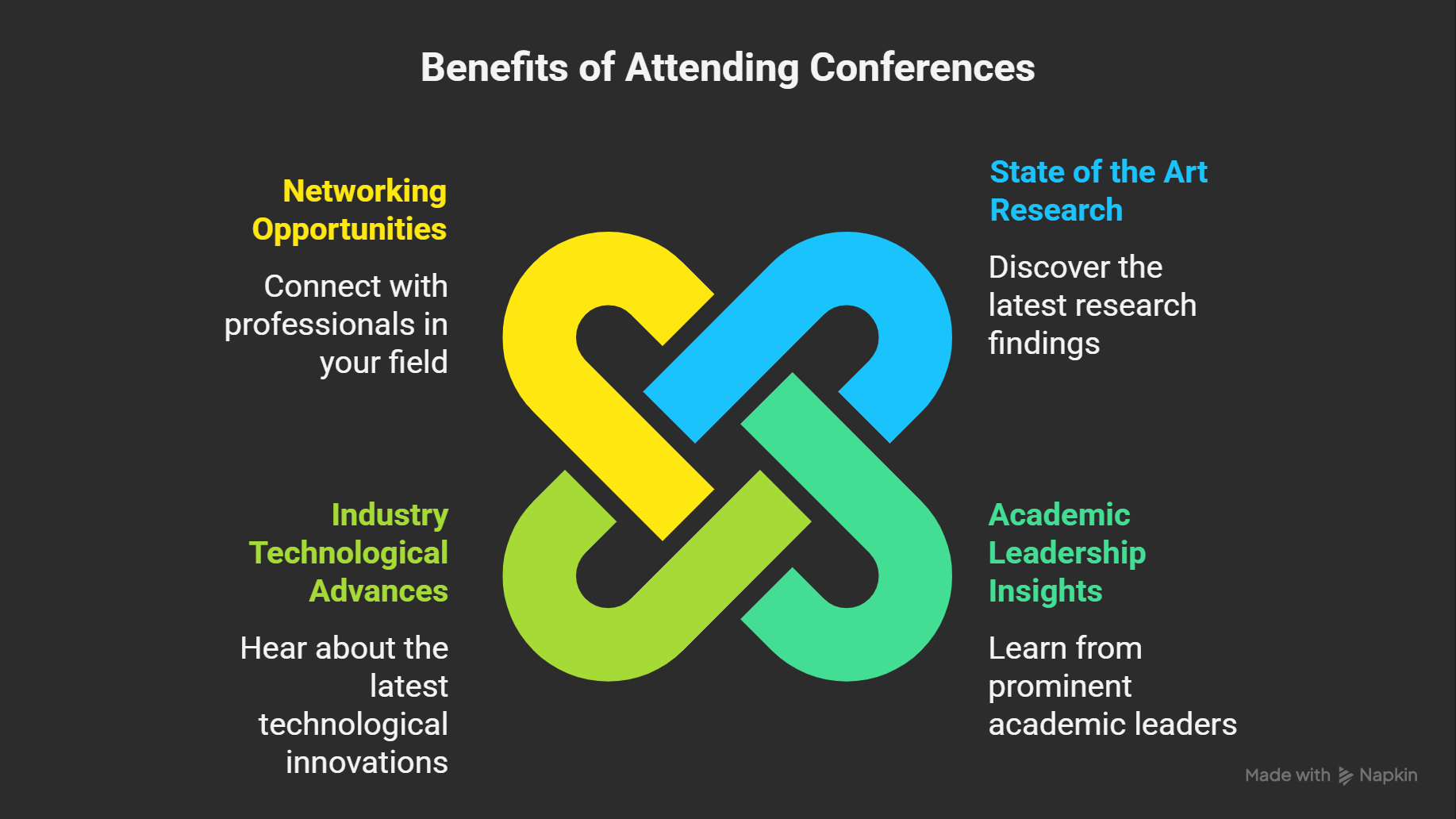
- To catch up with the state of the art, hot off the researcher’s desk/lab. That includes your research too.
- To hear from prominent academic leaders about the overview of a specific sub-discipline.
- To hear from industry representatives about the latest technological advances and marketplace devices.
- To get to know people who are working in your discipline, and also reconnect with your existing academic and industrial contacts.
So how do you, as a first-time conference goer make the most of the 2-3 odd days of the conference?
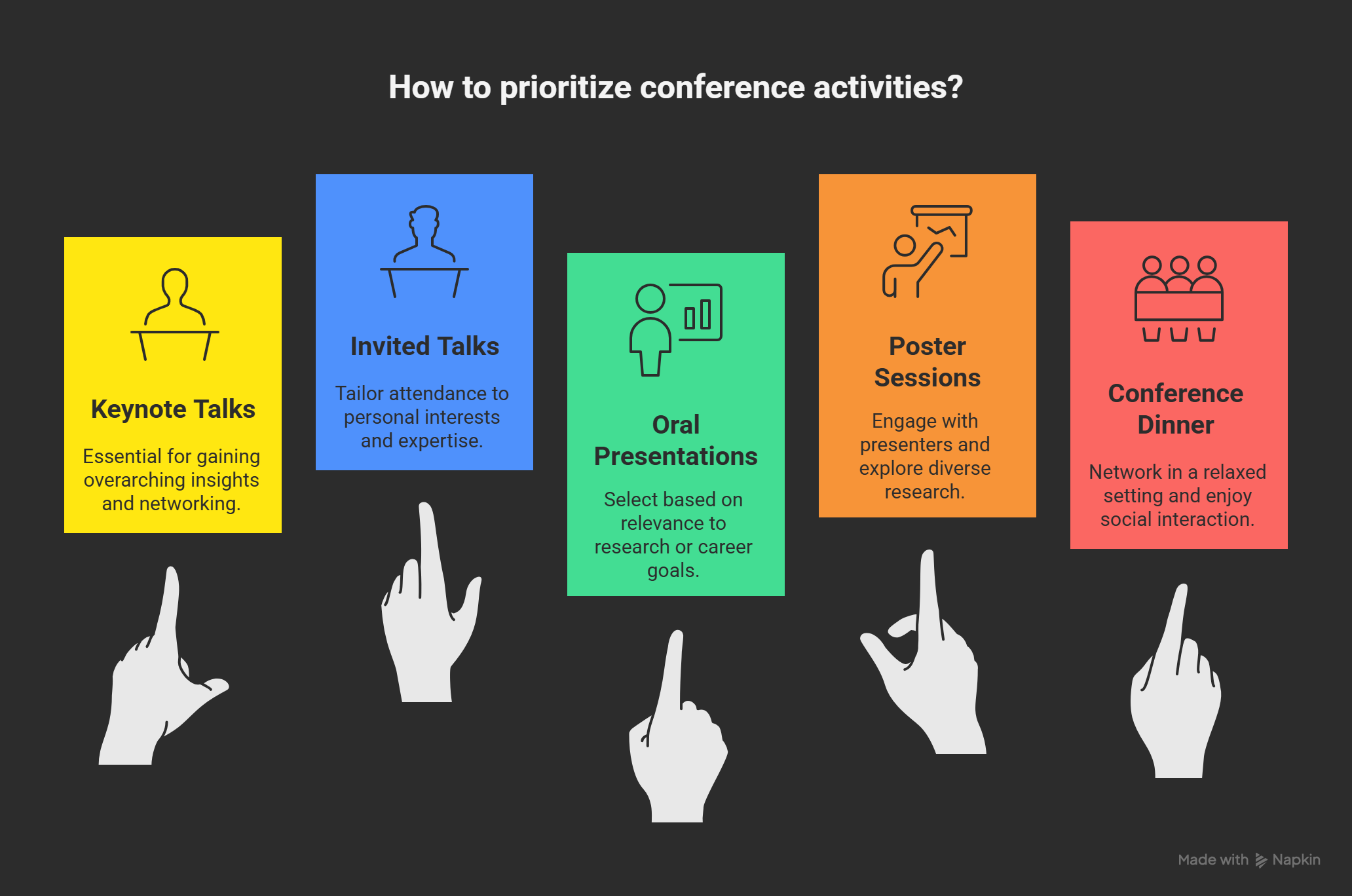
From a meta- perspective, it boils down the following.
- Make keynote talks a priority.
- Attend the invited talks as per your preference.
- Prioritize the oral presentations you would like to attend.
- Walk around the posters, and interact with the presenters.
- If resources permit, attend the conference dinner.
Here are some more detailed pointers –
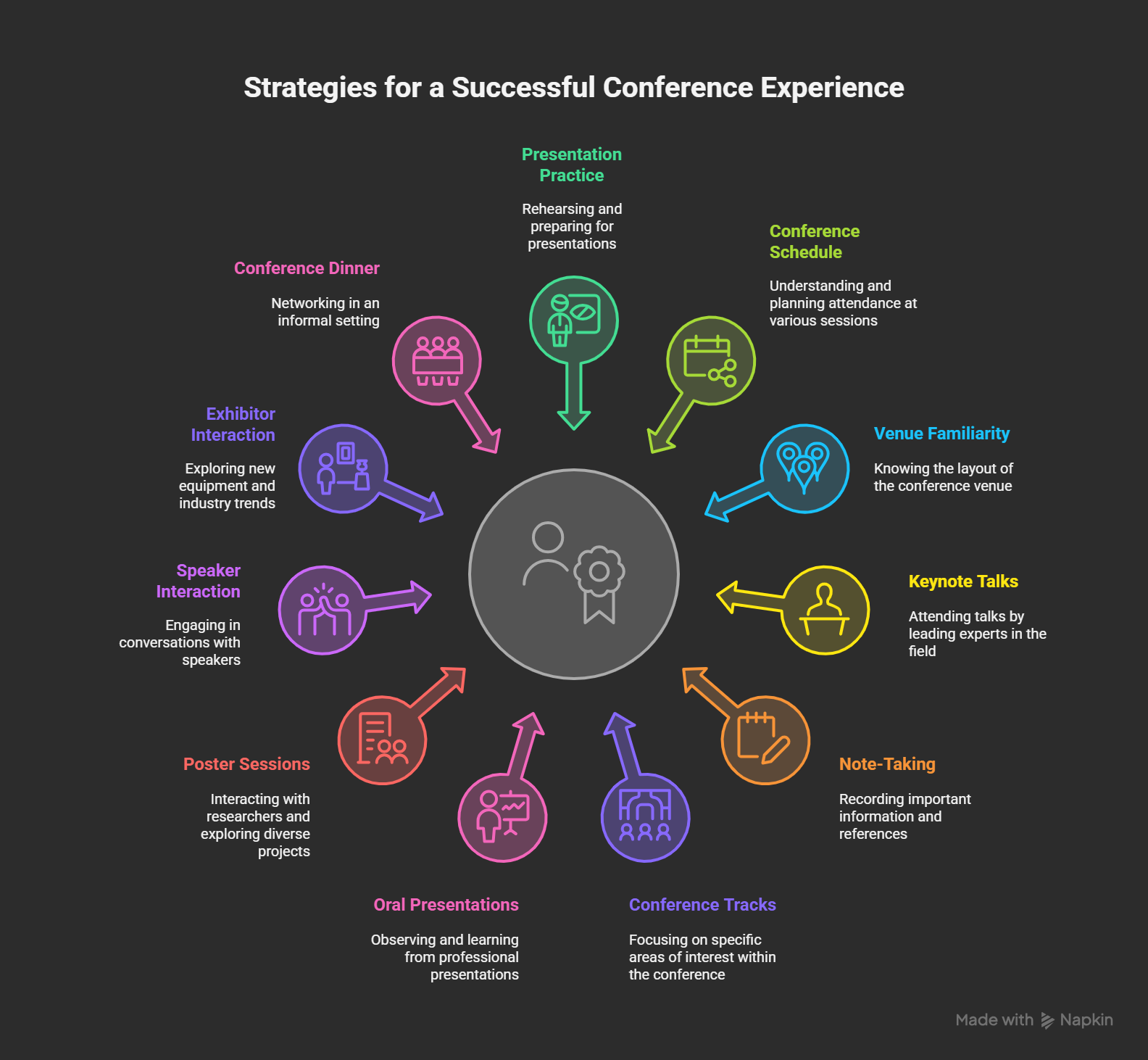
- Practice your presentation/poster delivery well, and you have the resources and back ups in place.
- Download the schedule of the conference, and get acquainted with the different conference tracks. These are the sub-disciplines that the conference typically addresses, and there will be a series of talks from other conference delegates under them.
- Use a calendar app to schedule the talks you want to attend. Larger conferences typically provide the schedule as an app, so keeping track of the talks become easier. If not, you can use your trusty calendar app.
- Get acquainted with the conference venue. The talks will typically be distributed across rooms and auditoriums (auditoria?), so knowing their locations prior will help you to sequence and plan your talks.
- Attend the keynote talks. These are priority. You will get to hear from top-most scientists of the field, who typically will trace the evolution of the sub-discipline too. This will introduce you to new ideas and concepts from the ground up, which you can refine later.
- Take notes. You will think you will remember, but you won’t. This will also help you to keep track of references that will be shared on the slides. Nowadays speakers also understand that attendees may take photographs of slides, so you can also take a few snapshots. However, if they request that photos not be taken, this must be respected.
- Identify key conference tracks of your interest, and attend the invited talks. This is a good opportunity to know of the active researchers in the field, and their current work. It will not be possible to attend all invited talks, so prioritize.
- Attend the oral presentations – not just to become aware with the state of the art, but also to learn how to deliver conference presentations professionally. Pay attention to details like the delivery, the slide content, the presentation of the information. Keeping with time is also important, so observe how the presenters manage this. Again, you will not be able to attend all the oral talks, even within your interested conference tracks, so planning and prioritizing will be crucial.
- Attend the poster sessions. This is a good opportunity to get to know the larger ecosystem of research that is being carried out in the conference topic. More importantly, you will be able to interact with poster presenters one-on-one, which is great to know more about their research, and also to build your academic network. It is quite common to have such 10-15 minutes conversations transform into long lasting academic partnerships.
- Talk to the speakers, if the topic they presented truly interested you. Regardless of academic stature, every speaker was a first-time conference attendee once, and they would surely appreciate what you have to ask or say to them. You can even lead with the fact that you are a first-time conference attendee! Politely introduce yourself, and engage in a conversation – like what aspect of their talk interested you, or what specific question you had about their talk. However, do your best to keep your conversation short, and if you do see the need for a longer one, request whether you can keep in touch with the speaker over email.
- Interact with the exhibitors. You will get to know what is the state of the art equipment that is available to take your research to the next level. Even if your work is predominantly theoretical or numerical, you will see what is possible with today’s tech, and perhaps you may end up coming up with an entirely new way of looking at things via your models and simulations. In this regard, also attend the industry talks and panel discussions, as they will discuss the recent trends and challenges.
- Attend the conference dinner. Sometimes the cost of this is included in the conference registration itself, while sometimes this is to be paid for separately. In this regard, if resources and circumstances permit, do attend this. The atmosphere is convivial, and this allows you to interact with the speakers and your newly made friends in a more informal setting.
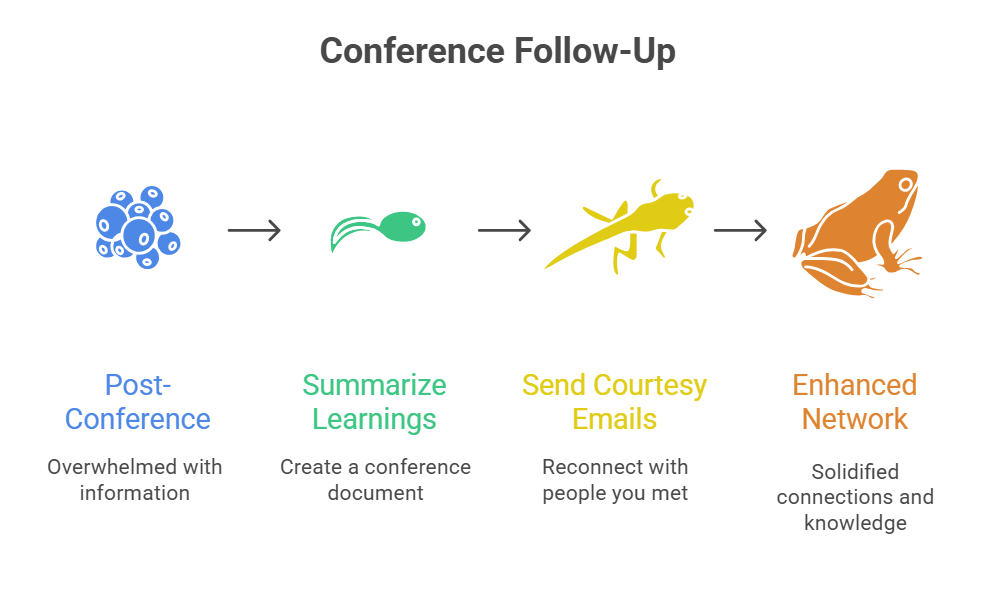
Once you are back from the conference, there are two important things that you must do.
- Prepare a summary conference document or presentation. This helps to summarize the talks you attended, the new concepts you learnt, the speakers you met, and also the important papers that came to know of during the conference.
- Write a one-line email courtesy email to the people you met in the conference, and would like to keep in touch with. Conferences are busy venues, and we meet a lot of people. Such emails are touchstones, which will help you to reconnect when you meet again.
Needless to say, the above list is non-exhaustive. Each person will experience a conference differently, and over a period of time you would figure out your own path through them. But I hope that the above helps you to dip your toes, and not miss out anything important. Drop a comment if there is anything you can add to the above!
Happy conferencing!
[AI Usage statement – No part of the text above was generated using AI. The images were generated using the website napkin.ai using the blog text as prompts.]
So, you are attending your first conference © 2025 by Srikanth Sugavanam is licensed under CC BY-NC-SA 4.0


